Newquay: Attractions, Days Out and Places to Stay
Newquay Zoo, Blue Reef Aquarium Newquay and more: the attractions, the days out and how to plan your visit.
Newquay Zoo, Blue Reef Aquarium Newquay and more: the attractions, the days out and how to plan your visit.
Newquay is a seaside resort and a fishing port on the north coast of Cornwall, and it is one more thing besides: a regional centre for aerospace industries, with an airport and a spaceport. It stands approximately 12 miles (19 km) north of Truro and 20 miles (32 km) west of Bodmin. The part of it a visitor uses is small — the walking day published here, aquarium to zoo, covers 2.42 km and about 45 minutes on foot spread across a whole day, plus roughly 20 minutes back to the car. It suits people who want sand within walking distance of where they sleep, and who do not mind that reaching any of it means a hill, a ramp or a flight of steps.
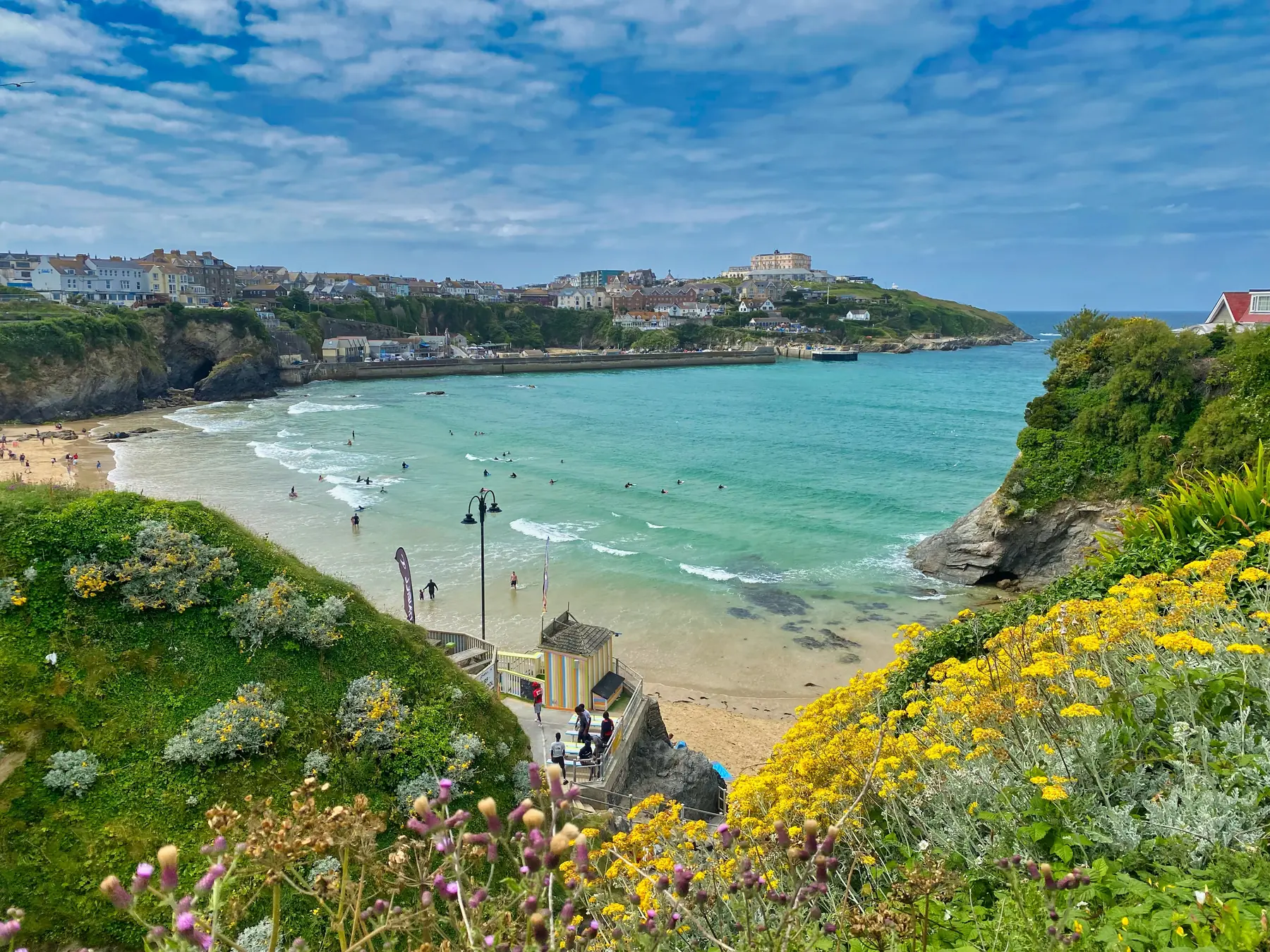
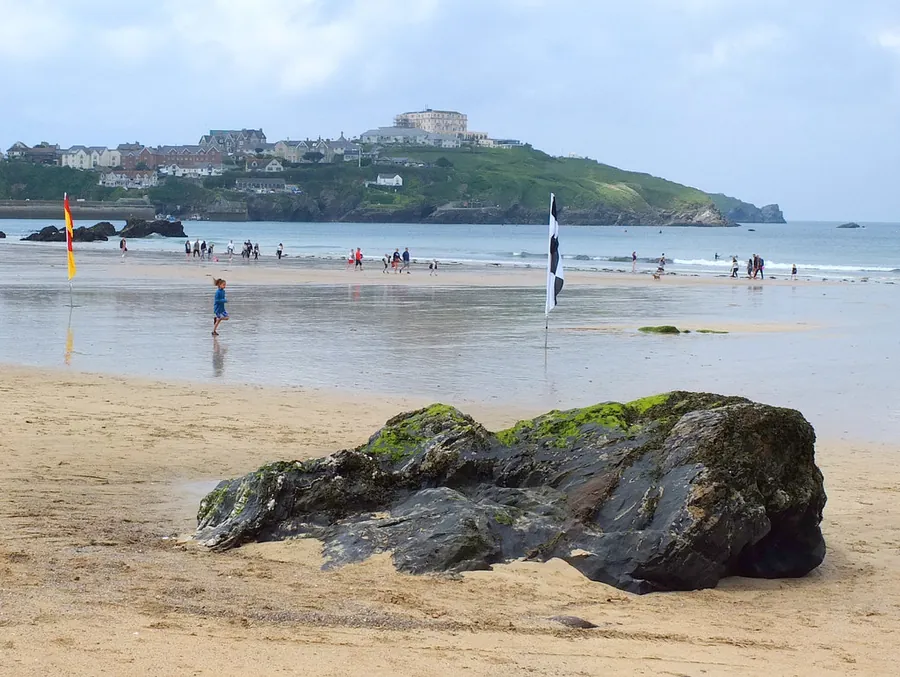
Newquay is built on the cliff and its beaches are underneath, which organises a visit. The Blue Reef Aquarium on Towan Promenade sits, as a visitor in September 2025 put it, “right at the bottom of the Town after a very, very steep hill”. Great Western Beach next door is reached by a ramp up to street level, of which a visitor in July 2022 wrote, “the hill is steep on the way up and down.”
East from the centre the beaches run Towan, Great Western, Tolcarne, then Lusty Glaze, Porth and Whipsiderry, with Watergate Bay beyond, and at low water several of them join up — a visitor to Lusty Glaze in July 2026 noted that at “Low tide you can also walk back to Newquay on the beech.” Lusty Glaze is privately owned down to the low watermark and open free of charge to the public for much of the year, but it is a descent: “133 steps down a cliff”, a visitor counted in May 2026.
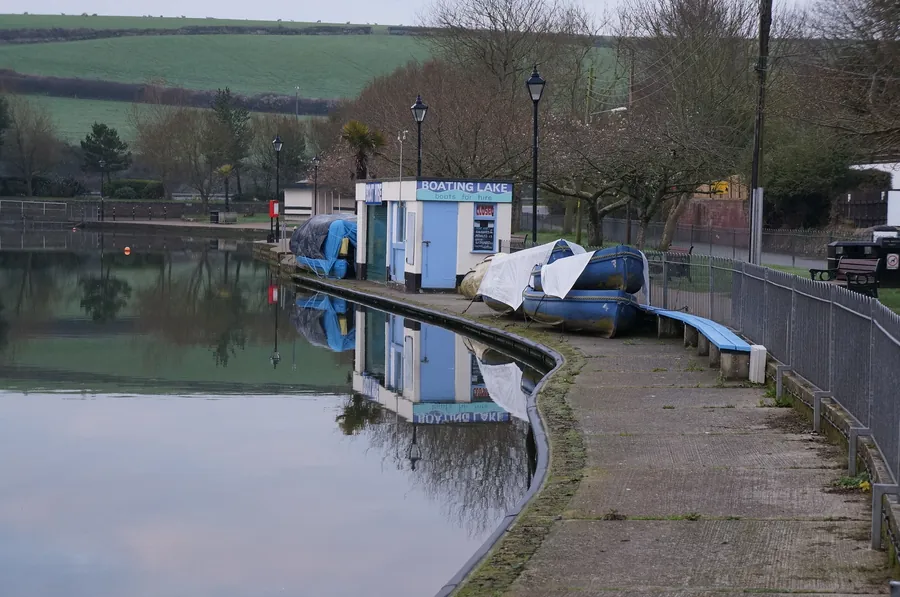
West of the centre the land pushes out into Towan Headland, with the Huer’s Hut and the Old Lifeboat House on it; Fistral lies beyond, about 27 minutes’ walk from the station. The harbour and its boat-trip kiosks sit below the town on South Quay Hill, the Gannel estuary closes the town off to the south, and inland at Trenance are the zoo, the boating lake and the gardens. The station itself is 0.3 km from the centre and step-free to all platforms, though it has no ticket office and no machines.
Not crowds. Across 200 recent Google reviews sampled in August 2026 for the town’s main sights and operators, ten mention crowds, queues or a place being busy, several of them to say it was not. What twenty-nine mention is parking.
The pattern is small car parks at good places. A visitor to Crantock Beach in August 2026 wrote simply, “Not too many parking spaces”; one in July 2026 found “Two parking lots, both hard to find a free spot, take your time but it is worth waiting.” In town, two of the busiest attractions have none of their own: of the aquarium, a visitor in April 2026 warned that “there is no on-site parking; you will need to use an external car park and walk to the entrance”, and of the zoo, one in April 2026 noted it “has no official car park but a council run carpark is right next door”. Inland, a visitor to Trerice in May 2026 found the house “Approached by a single track narrow lane with infrequent places to pass on coming traffic”, and its car park “small so it might be best to avoid busy times.”
The tide is the other recurring subject, and the Gannel is where it catches people out. A visitor to Crantock in May 2026 left a warning worth repeating: “if you park at Pentire Headland in low tide and go short downhill ,crossing river bed to get to the beach , you’ll have fun time to go back ,as tide comes surprisingly and cutting your way back”. Some places stay quiet regardless — at Wheal Coates in June 2026 there “were only half a dozen other people about and there was loads of space in the car park”.
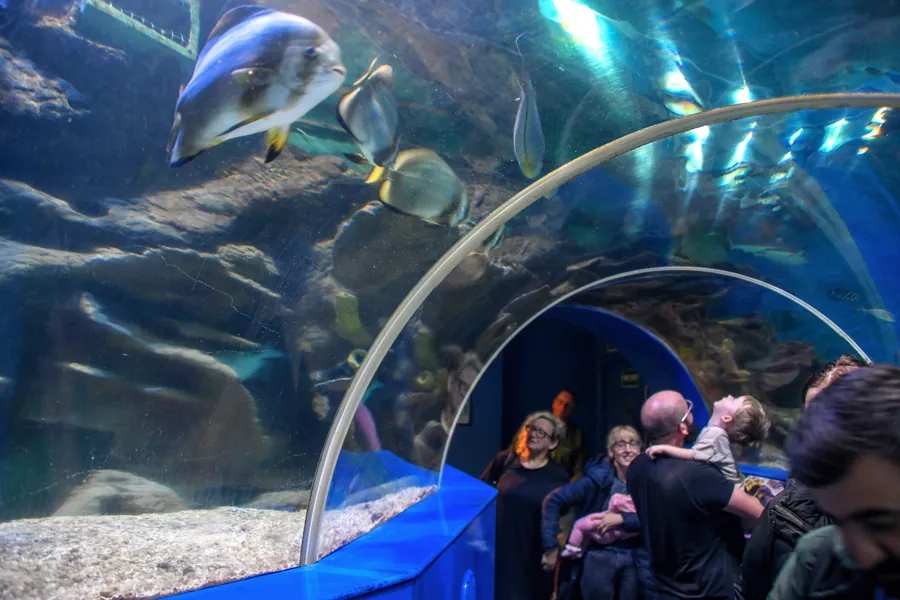
Half a day buys the beaches directly below the centre and the aquarium, which is small: a visitor in August 2026 called it “Not very big, but packed with amazing creatures”.
A day covers the town. The walking day published here runs Blue Reef Aquarium, coffee on East Street, Great Western Beach, lunch on Cliff Road and Newquay Zoo: 2.42 km, about 45 minutes on foot spread across the day, plus roughly 20 minutes back to the Manor long-stay car park off St Michael’s Road. Reviewers put the zoo — the largest in Cornwall, about 993 animals of 36 species on a 13-acre site — at around two hours, one in July 2026 reporting “about 2 hours to walk round everything (2 laps of the site)”, though others stayed all day for the keeper talks.
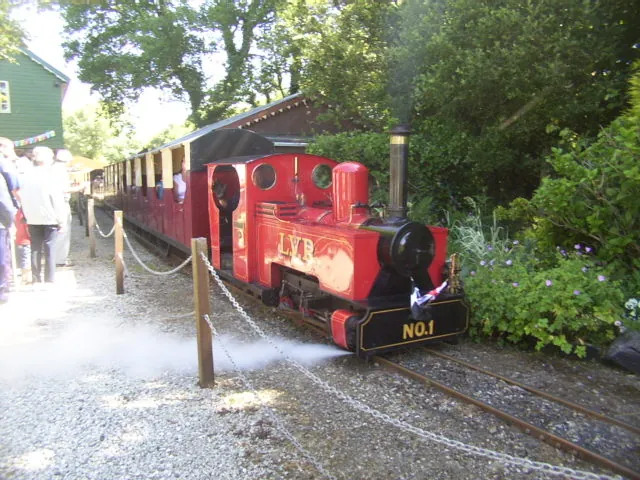
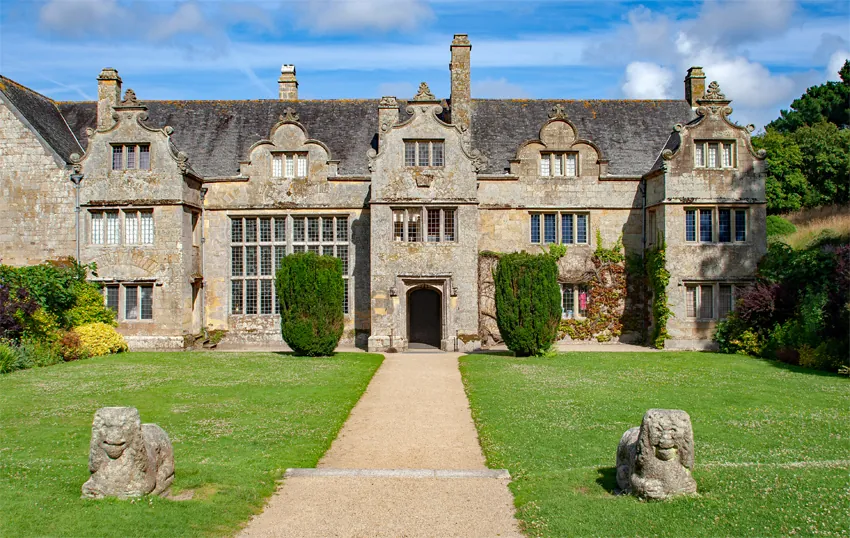
Two nights takes in the inland attractions — Lappa Valley’s minimum-gauge railway, the Tudor manor at Trerice, the engine houses at Wheal Coates — and the water itself: surf lessons, coasteering, sea kayaking and paddleboarding are all bookable here, and the beginners’ lesson is what most people come for.
Distances are straight-line from the centre. St Columb Minor, 2.3 km east, is now part of the civil parish of Newquay. Crantock is 2.6 km, with its beach, its dunes and the cave at Piper’s Hole nearby. Cubert is 4.8 km; St Newlyn East 5.8 km, with the Lappa Valley railway below it; St Mawgan 7.3 km, which holds the Japanese Garden — small enough that reviewers describe about an hour there.
Perranporth, whose beach is about two miles long, is 9.6 km, and St Columb Major 10.3 km. St Agnes, ten miles (16 km) south-west of Newquay by reckoning5 km straight-line, is the village for Wheal Coates. Padstow is 17.0 km, or 10 miles (16 km) north-east , and Carnewas at Bedruthan lies on the coast between the two; the clifftop walk is the draw, not the beach, which a visitor in September 2023 reported unreachable “since the storms 2019/2020 eroded big chunks of the cliffs”.
The cycling follows the same pattern. National Cycle Network Route 32 reaches Newquay on narrow, hilly Cornish lanes; the easy, traffic-free riding is the Camel Trail, taken as the Wadebridge and Padstow loop, 45.8 miles (73.8 km).
The most-visited sights in and around Newquay.
The Lappa Valley Railway is a 15 in minimum-gauge railway located near Newquay in Cornwall.
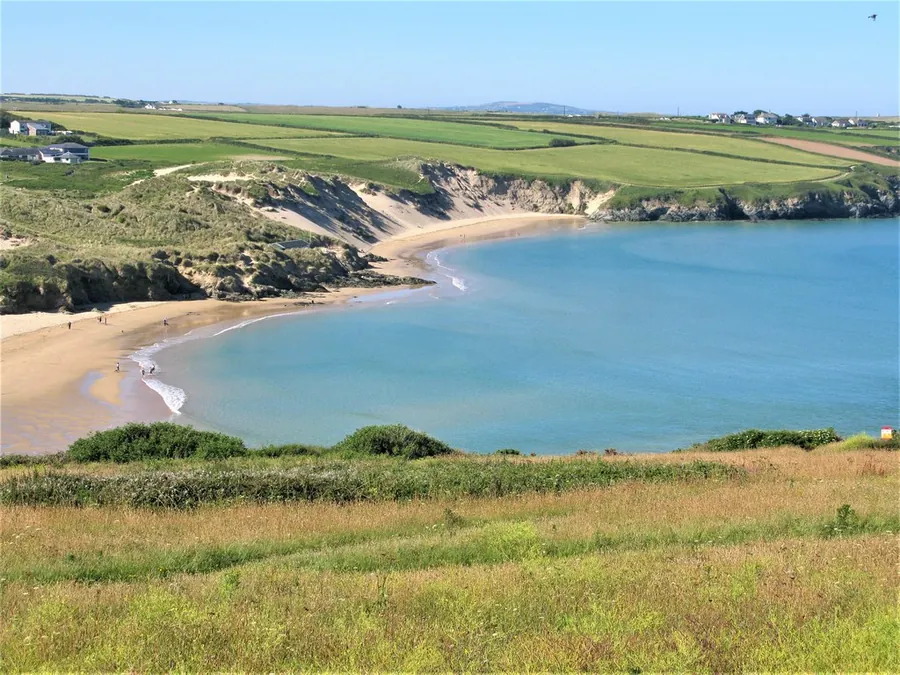
Trerice is an historic manor in the parish of Newlyn East, near Newquay, Cornwall, United Kingdom.
The top sights on one map — and a sensible order to see them in.
Attractions, prices and availability in Newquay
These come from GetYourGuide's booking widget, which sets their cookies in your browser. Consent to load it and see the attractions and prices.
Follow the M5 to Exeter, then take the A30 to Newquay. Leave this road near Indian Queens and continue on the A39 and then A392 which takes you directly into the town.
Newquay is the terminus of a branch line that connects to the main line at Par. From Par, trains run hourly to London Paddington (4 hr 30 min, via Plymouth, Exeter and Reading) and to Penzance (1 hour); other destinations may involve a change at Plymouth or Exeter. There are eight trains a day between Par and Newquay, including daily through intercity trains between London and Newquay from May to September.
National Express buses run four times a day from London Victoria (NX406, 503 and 504) via Heathrow Airport, Reading, Plymouth or Exeter, and Bodmin, taking 8 hours to Newquay and continuing to Penzance. Redwood Travel (on behalf of Megabus) runs the same Victoria-Newquay route daily; it doesn't extend to Penzance. Bus NX330 runs daily from Nottingham via Leicester, Birmingham, Worcester, Bristol, Plymouth and…
Written from what we found on the ground.
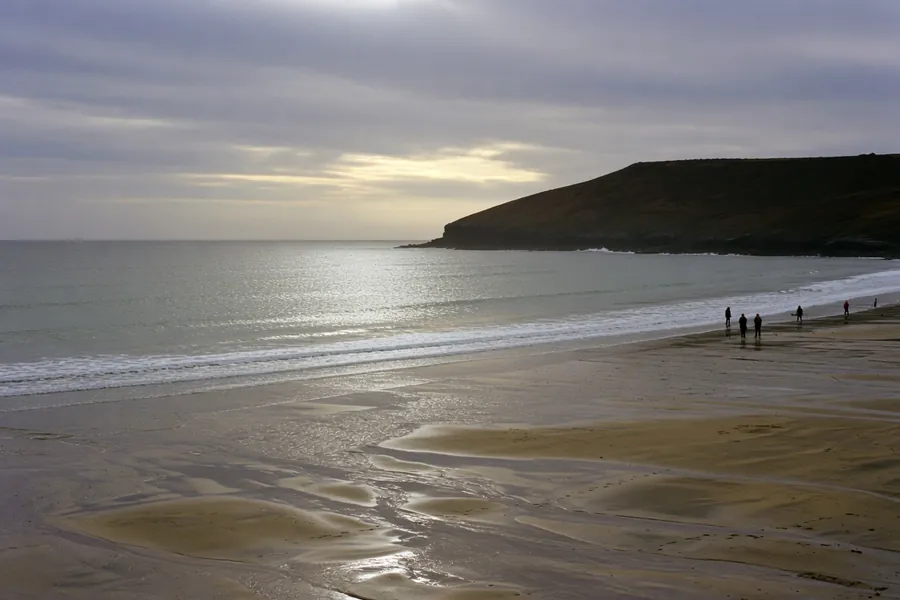 Watergate Bay and Mawgan Porth from Newquay The two beaches north of Newquay — the 56 bus to both, the coast path between them, which beach suits whom, tide and rip safety, and what's on this autumn. Read the guide →
 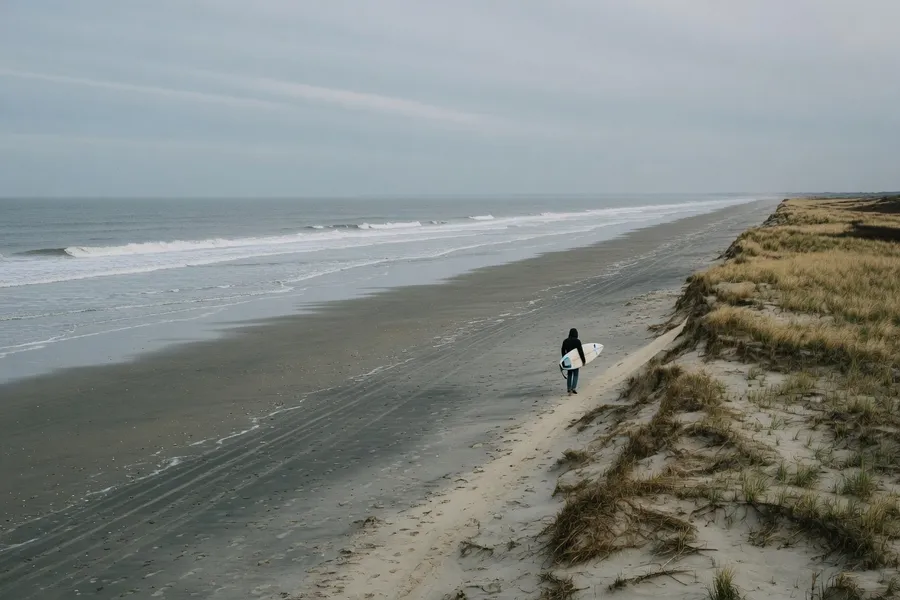 Fistral Beach: The Surf, the Tides and the Headland Walk Fistral Beach in detail — the surf that made it the home of British surfing, South Fistral and the beach's own car park, the one surf school, flags, water quality and the East Pentire headland walk. Read the guide →
  Parking in Newquay: Council Parks, Park and Ride, and Where Not to Circle Where to leave the car in Newquay — council long-stay and short-stay parks, the summer park and ride, Fistral, Crantock, motorhomes, and why Fore Street after nine is the wrong hunt. Read the guide →
 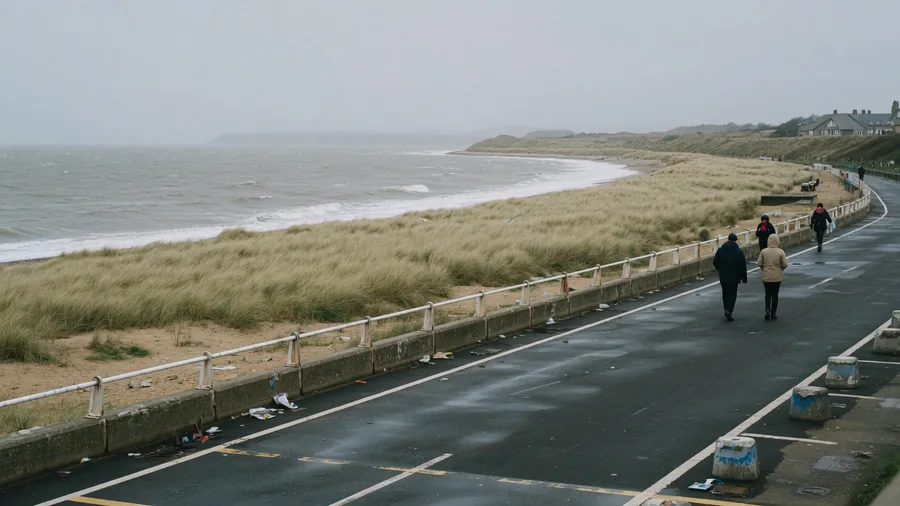 When to Visit Newquay: Surf, School Holidays and the Empty Winter Town The best time to come to Newquay — Atlantic swell, cold sea even in August, school holidays, Boardmasters, and why May, June and September are the months that actually work. Read the guide →